30,000+Samples per sell-in windowSeen in person, in a few days, by every buyer
1 scanFrom sample to wishlistNo codes typed up by hand: it lands straight in the desktop order tool
GlobalOne launch windowEvery market at once, in the late-September 2026 pre-selling window
The challenge
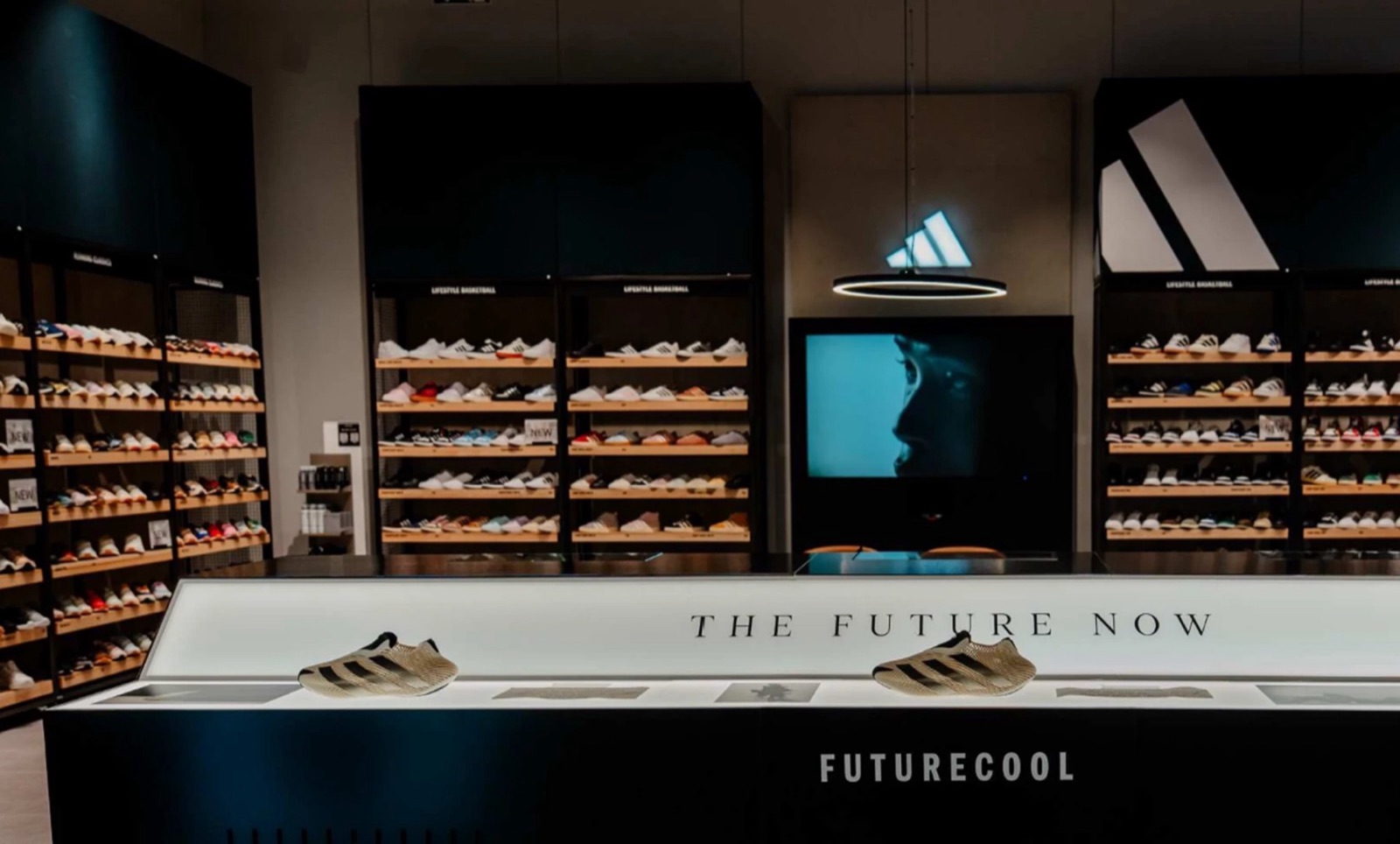
Wholesale sell-in happens in physical showrooms, where buyers move through more than 30,000 samples in a short window. Whatever caught their eye was noted by hand and typed into the desktop tool afterwards, one article at a time, before an order could even start.
The work
As design lead, I took the app from discovery to launch, moving from reviewing a partner's screens to owning the design end to end. The MVP does one job: buyers add articles to their wishlists as they see them, and those wishlists sync to the desktop tool where orders are placed. Buyers spend the meeting looking at the product, not writing it down.
01 · The showroom
A physical room, served by desktop tools
Prelines and sell-in are physical, but the tooling was built desktop first. In a room with tens of thousands of samples and very little time, buyers relied on memory, notes or spreadsheets, and what they liked only reached the system after the fact, if it reached it at all.
Buyers get one pass through rooms like this per sell-in window.
02 · The scope
Feed the desktop, don't replace it
Discovery with the markets in April was clear. They wanted to scan an article and add it to a wishlist that flowed back to the desktop. RFID and touch tables came up as impractical and underused, and desktop stayed, without question, the place where orders are placed.
So we scoped the MVP to one job: scan an article and add it to a wishlist that lives in the desktop tool. The phone doesn't replace the order, it removes the manual step before it.
"want to scan articles and add to a wish-list"
Market team, April discovery
03 · The flow
Eyes on the product, not the notes
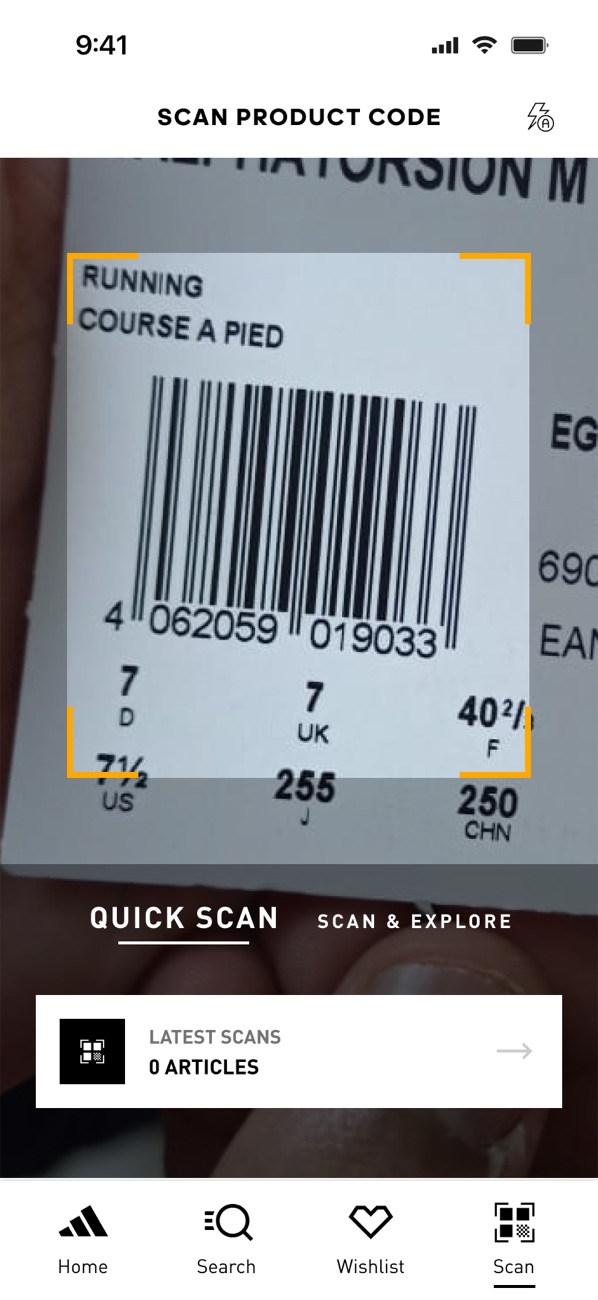
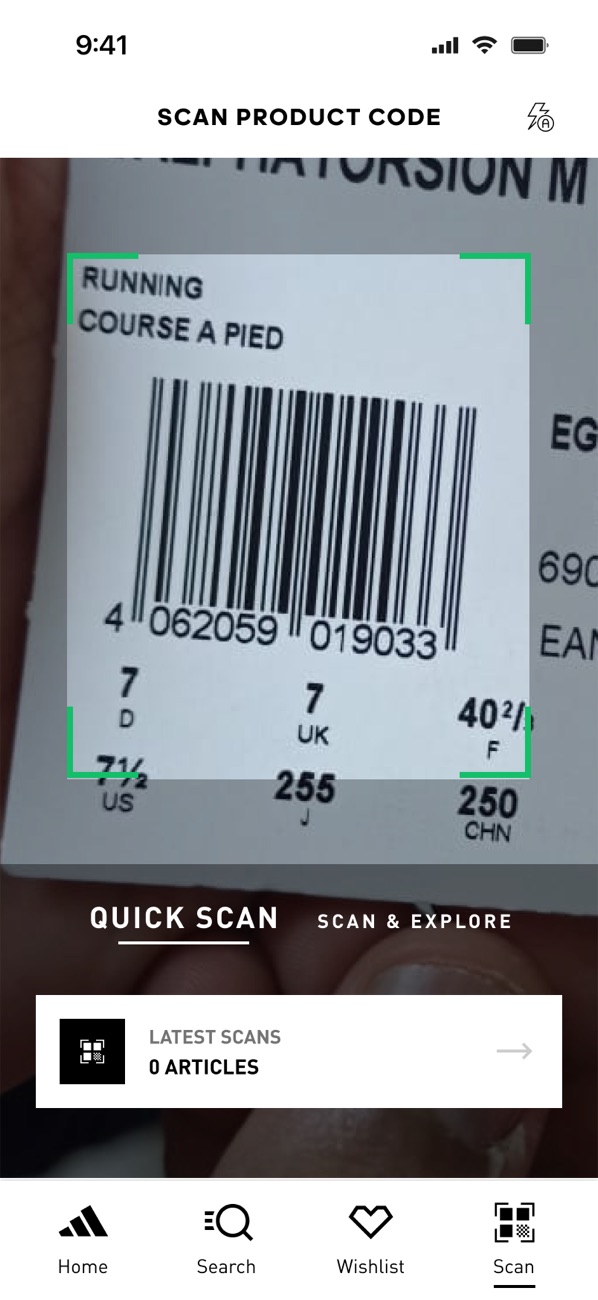
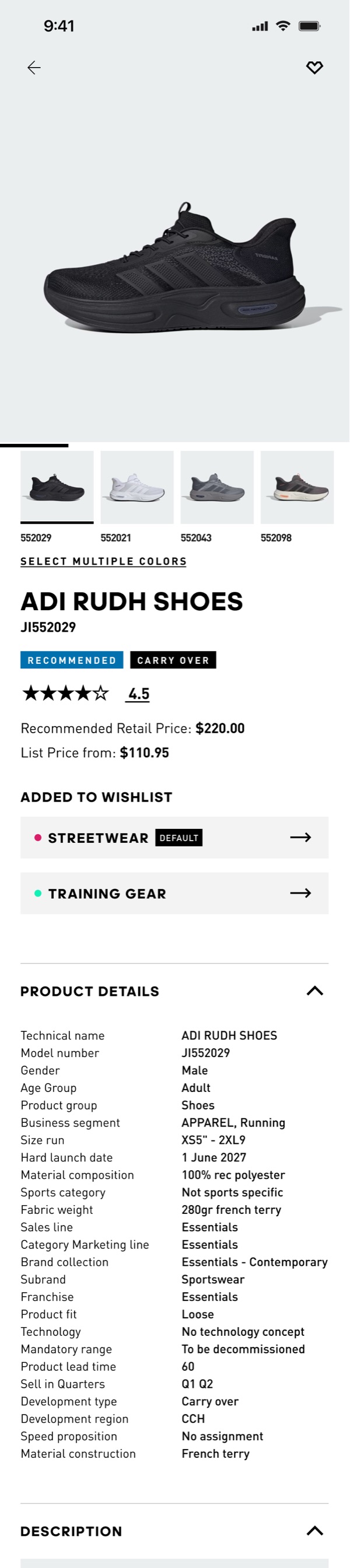
Quick scan saves the article straight away. The product page holds the detail to compare.
Buyers log in with the credentials they already use on desktop. Scan a barcode and the article drops into the selected wishlist with a confirmation, without leaving the camera, or open the product page first and save it with the heart, with the option to switch wishlist right from the confirmation. The wishlist stays selected for every scan that follows.
Writing things down pulled attention away from the reason buyers were in the room: the product. With a scan taking a second, that time goes back to the sample in their hands, to looking at the details and comparing it with the one next to it. The point was never only speed. It was giving buyers their attention back.
04 · The decisions
Two decisions did the real work
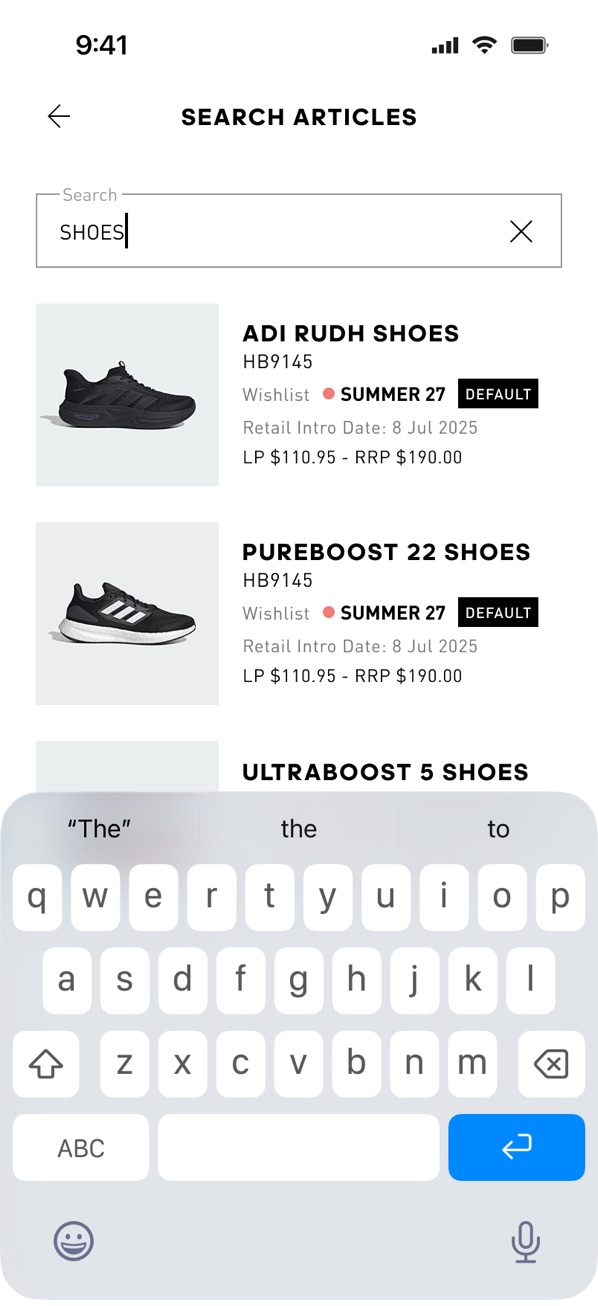
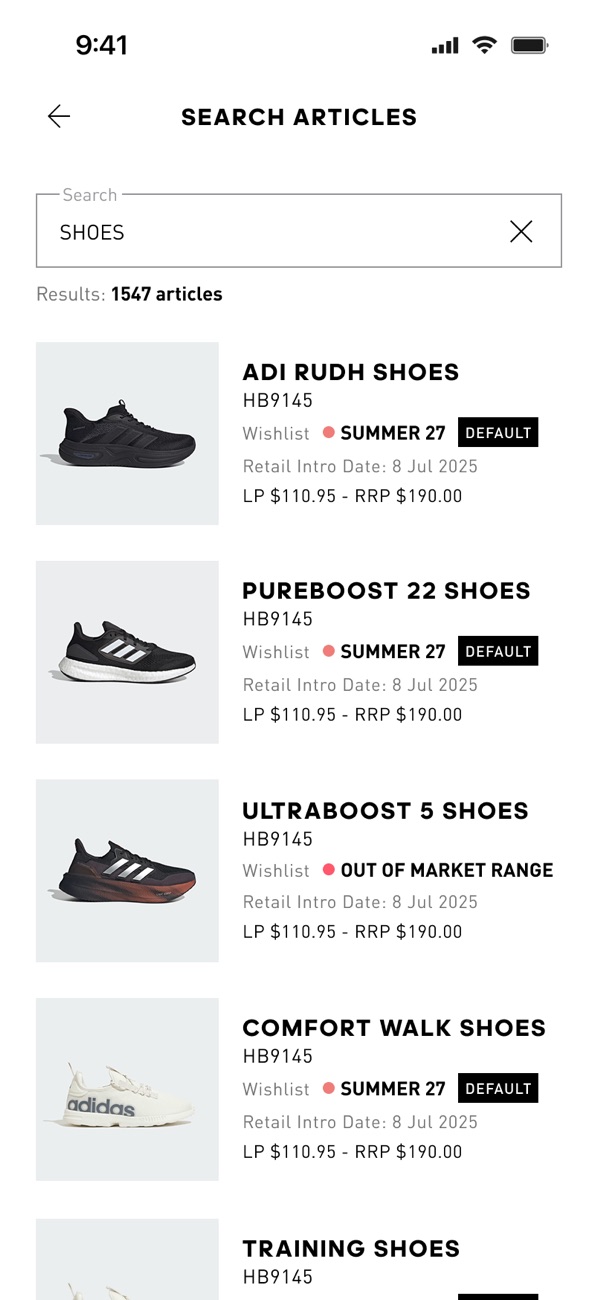
Search by name or article number. Out-of-range articles are flagged, not hidden.
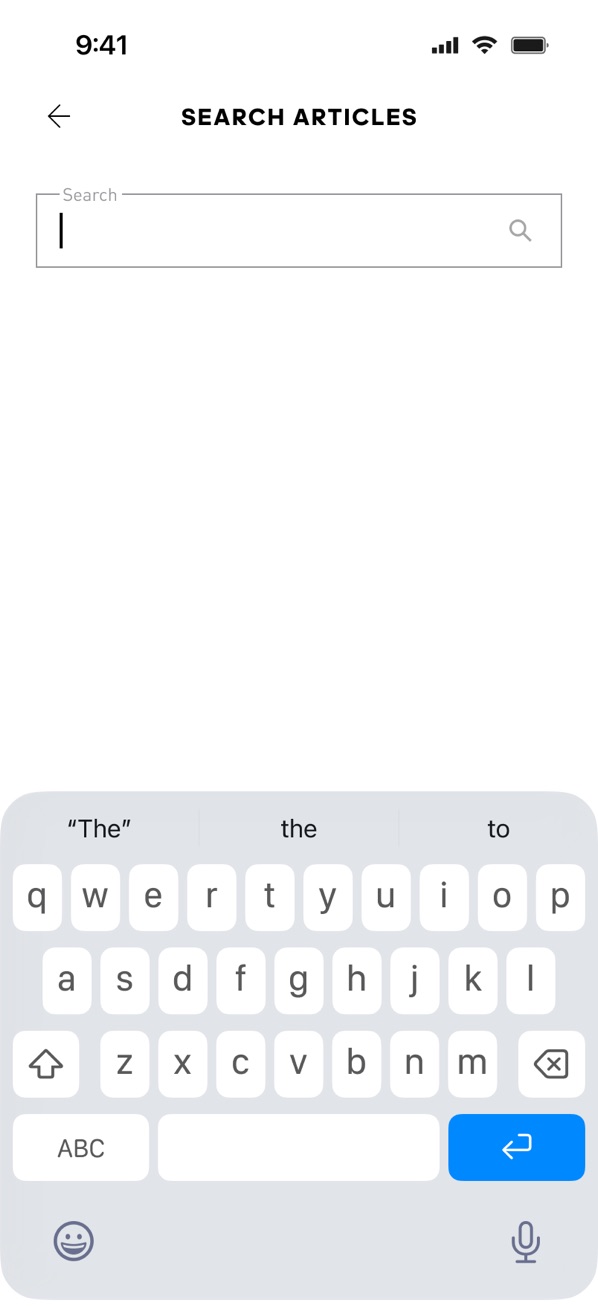
Not everything can be scanned. Some samples have no barcode, or a tag worn off on a busy floor, and sometimes a buyer simply knows what they're looking for. So the scanner always sits next to a search, by name or by article number, and every result shows which wishlist it is already in.
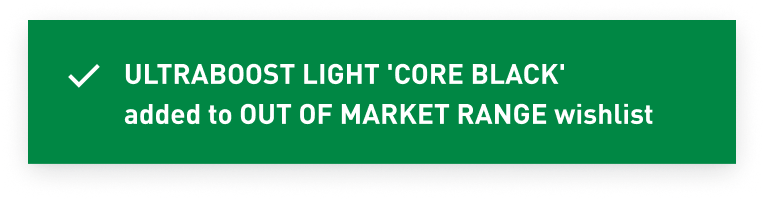
Show everything, flag what's out of range. Buyers see the whole collection, not only their market's assortment. Articles outside it are marked out of range, but they can still be saved to dedicated wishlists. That list becomes the case a market takes back to push for those articles to be included.
05 · Where it landed
Nothing left to type up
The MVP was set to launch in every market for the late-September 2026 pre-selling window. Articles reach the wishlist the moment they're seen, already in the system the order is placed from, with nothing to copy across afterwards.
We expected bigger wishlists too, since scanning is cheaper than writing something down and out-of-range articles finally have somewhere to go. But the change that mattered most happens in the room: less time on notes, more time looking at the product and comparing before deciding.